

The Changing Face of the Chinese Exam
For generations, preparing for Chinese language exams in Singapore meant long hours of memorising vocabulary lists, practising composition formats, and repeating spelling drills. The emphasis was squarely on written performance. Parents and students alike were conditioned to associate Chinese success with the ability to churn out descriptive essays and regurgitate memorised phrases. However, a quiet revolution has been taking place within the Ministry of Education’s (MOE) Chinese curriculum. If you are a parent today, you may have already noticed that the exam your child faces looks very different from the one you took. What used to be a test of writing accuracy has evolved into an assessment of communication.
There is a significant pedagogical shift underway—one that reflects changes in both local education philosophy and global language needs. The spotlight is now on oral fluency and listening comprehension. In the Primary School Leaving Examination (PSLE), and increasingly across other levels, students are being asked not just to write in Chinese, but to think, speak, and listen in it with understanding and confidence.
This article explores the reasons behind this shift, outlines what these new exam formats entail, and offers parents clear strategies to help their children adapt. It’s no longer about rote learning and model answers. Success now depends on real, spontaneous engagement with the language—and that starts at home.
Why This Change Is Happening: From ‘Studying’ Chinese to ‘Using’ It
Developing Communicative Competence
The MOE’s long-term aim has never been limited to exam performance. The goal is to develop bilingual students who can comfortably navigate both English and Chinese environments. This requires not just literacy, but the ability to communicate effectively. Communicative competence—being able to understand, speak, listen, and interact naturally in Chinese—is the cornerstone of this new direction. MOE wants learners to not only recognise characters on paper but also to use the language confidently in everyday interactions.
Aligning with a Globalised World
China’s increasing influence on the global stage in terms of economy, politics, and culture has made Chinese fluency more relevant than ever. Employers across various sectors in Singapore now value bilingualism as a practical skill, not merely a school subject. Being able to read, write, and especially communicate orally in Chinese opens doors to regional and international opportunities. The shift in examination focus is MOE’s response to these global trends, ensuring Singaporean students are equipped for the future economy, not just the classroom.

Moving Away from Rote Learning
The traditional model of Chinese learning in schools often centred on memorising essays, vocabulary chunks, and rigid grammatical structures. While this produced passable exam results, it failed to foster genuine language acquisition. Students could often write a composition with flowery idioms, yet struggle to order a meal in Chinese at a hawker centre. The new oral and listening components are deliberately designed to resist this kind of mechanical preparation. They prioritise understanding, spontaneity, and contextual awareness, requiring students to process meaning in real-time and respond appropriately.
Understanding the New Format: What Has Changed?
Oral Exam: From Static Descriptions to Dynamic Conversations
In the past, oral exams typically involved describing a picture. Students could prepare set phrases, and with enough drilling, produce rehearsed, often superficial descriptions. The new format introduces a video-based component. Instead of a still image, students now watch a short clip—perhaps a family scene, a school incident, or a social situation—and then respond to questions based on it. This shift introduces time sensitivity, emotional nuance, and the need for personal response.
The key difference is that the student must now interpret rather than merely observe. They need to consider the motivations of characters, the implications of actions, and how they themselves would react in a similar situation. Furthermore, the second part of the oral exam has become more of a conversation than a monologue. The examiner now engages the student in a dialogue, asking for justifications, examples, or personal opinions. It’s not enough to simply give an answer—the student must explain why they think the way they do, a skill that cannot be easily memorised.
Listening Comprehension: Complexity and Critical Thinking
Listening comprehension used to be relatively straightforward: short announcements, basic narratives, and single-speaker clips. The updated format includes more elaborate dialogues, multi-character interactions, and real-world scenarios. Students may hear two children discussing a problem or a conversation between a parent and teacher. They are then asked questions that require interpretation of tone, intent, and hidden meaning.
This development tests more than simple factual recall. Students must listen critically, differentiate between opinions and facts, and interpret emotional subtext. It reflects how listening operates in real life—contextual, fast-paced, and emotionally layered.
What This Means for Parents: Adapting the Learning Strategy
Encouraging Conversation Over Memorisation
One of the most effective shifts a parent can make at home is to foster regular Chinese conversation. Instead of focusing on dictation and rote vocabulary practice, parents can invite their children to discuss topics in Chinese. These could be about school, recent news events, or even decisions like what to eat for dinner. The aim is not fluency at first, but comfort. When speaking becomes a natural, low-pressure part of family life, children are better prepared for the spontaneous nature of the oral exam.
Even a short daily chat in Chinese can help. Ask open-ended questions, and resist the urge to correct every mistake. What matters is that your child feels heard and that their efforts are acknowledged. Over time, their confidence will grow, and so will their vocabulary and sentence fluency.
Practising Active Listening
Listening can also be integrated into everyday life. Instead of using listening practice CDs as background noise, make it an interactive experience. Watch a short Chinese video together—perhaps a children’s news segment or a light-hearted skit—and pause to discuss what’s happening. Ask your child how they think the characters feel, what the key message was, and whether they agree with it.
This builds the mental habit of processing and reflecting on spoken language, just like they would have to in an exam. Podcasts, radio shows, or Chinese audio books are also excellent resources. The more variety your child hears, the better they’ll adapt to different accents, tones, and speaking speeds.
Fostering Opinion and Perspective
A major challenge in the new oral exams is the expectation that students express their own viewpoints. This is not something that can be developed overnight. From a young age, children need to be encouraged to think critically and to articulate their thoughts. Parents can model this by expressing their own views and inviting discussion.
For example, after a family outing, instead of asking, “Did you have fun?”, try asking, “What did you like most about today?” or “What would you change if we did it again?” In Chinese, of course. This encourages your child to evaluate experiences and articulate opinions—skills directly transferable to oral exam responses.
Broadening Their Language Exposure
Classroom materials are important, but they are not enough. Real mastery of listening and speaking comes from exposure to natural, authentic language. Supplement your child’s learning with shows, songs, and conversations in Chinese. Platforms like meWATCH offer local dramas with relatable scenarios and accessible language. Chinese music on Spotify or Apple Music can introduce rhythm and cultural references. Podcasts for children can be played during car rides. The key is variety. The more kinds of spoken Chinese your child hears, the more adaptable they become.
A Better Way to Learn Chinese
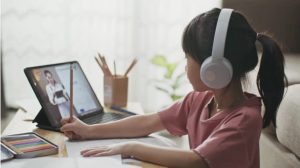
This evolution in the exam is actually an invitation: to shift the home learning environment from stress to communication. That change can begin with your daily routine. Families who create space for warm, low-pressure Chinese exposure—through conversation, media, play, and story—often find their children become not only better learners but more confident speakers.
To see how to build this kind of environment over time, explore our step-by-step framework on turning practice into a habit in our reading guide. It shows how 15 minutes a day can grow into lifelong comfort with the language—without coercion or burnout.
Preparing for the Future, Not Just the Exam
The changes to the MOE Chinese examination are not simply cosmetic. They reflect a deeper, more meaningful shift in how language is understood and used. Oral and listening components now form a major part of the assessment, pushing students to become users of Chinese, not just learners. This presents a challenge, but also a tremendous opportunity.
Parents have a vital role to play—not as enforcers of drill-based study, but as facilitators of natural engagement. By creating a home environment where Chinese is heard, spoken, and enjoyed, you are preparing your child not just to pass a test, but to function confidently in a bilingual society.
Embrace this change with a long-term view. The goal is not perfect grammar or flawless pronunciation. It is real connection—between ideas, between people, and between cultures. In helping your child become an active speaker and listener, you’re equipping them with a skill that will serve them far beyond the classroom walls.
And if you ever feel unsure where to start or how to shift your family’s language habits, we’re here to help. Visit the Connected Learning for more warm, practical strategies that honour both your child’s well-being and long-term growth in Chinese.