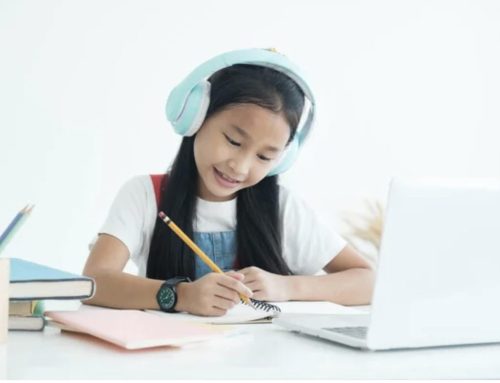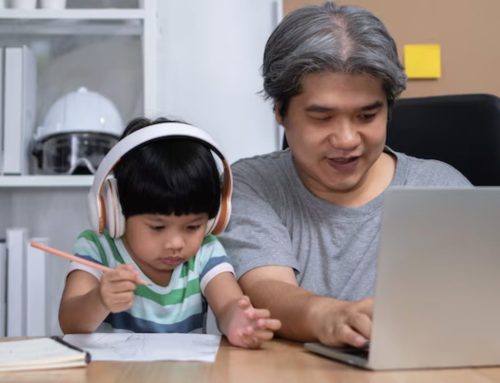


There’s a noticeable shift happening in how parents in Singapore approach Chinese learning.
A few years ago, it was mostly about grades, spelling lists, and drilling exam formats. That still matters, but many parents are starting to realise something uncomfortable: a child can score well, and still struggle to speak a simple sentence out loud.
If that sounds familiar, you’re not alone.
This gap between academic performance and real-life confidence is exactly where Chinese enrichment comes in. Not as a replacement for tuition, but as a different layer, one that focuses on comfort, expression, and actual language use.
If you’re searching for the best Chinese enrichment class Singapore offers, this guide breaks down what really matters (and what to avoid).
What Chinese Enrichment Really Means in 2026
Chinese enrichment is often misunderstood. It is not exam drilling, and it is not a lighter version of tuition. At its core, it focuses on how a child *uses* the language rather than how they are tested on it.
In practical terms, this means:
- Speaking without fear of mistakes
- Listening with understanding rather than memorisation
- Reading with context instead of translation dependency
- Writing with personal expression, not just model answers
According to Singapore’s Ministry of Education, bilingual proficiency remains a long-term national priority, yet surveys over the past few years have shown that many students feel less confident using Chinese in everyday settings compared to English. This is not a knowledge issue. It is a confidence issue. That distinction is important.

Chinese Tuition vs Enrichment
This is where many parents get stuck. Tuition and enrichment sound similar, but they solve very different problems.
| Aspect | Chinese Tuition | Chinese Enrichment |
| Focus | Exams & grades | Communication & confidence |
| Method | Worksheets, model answers | Speaking, interaction, role-play |
| Outcome | Better test performance | Real language usage |
| Pace | Structured & syllabus-driven | Flexible & adaptive |
A child who struggles to speak won’t magically improve with more worksheets. In fact, too much exam pressure can make things worse.
A better question to ask is:
“Does my child need better scores, or do they need to feel comfortable using Chinese?”
That answer usually determines whether Chinese enrichment is the right move for your child.
The Best Chinese Enrichment Classes in Singapore
1. Connected Learning — best for speaking and confidence
If the whole point of enrichment is to get your child talking, Connected Learning is built around exactly that.
Classes are capped at four students. That cap matters more than it sounds. In a group of four there’s nowhere to hide, so every child speaks in every lesson and gets corrected on the spot. Students are grouped by proficiency rather than age, which means a Primary 3 child who’s still finding their feet isn’t sitting next to someone writing full compositions. Lessons are run by native Chinese teachers who know the MOE syllabus but aren’t boxed in by it, so your child practises real conversation, not just model answers.
It’s also fully online, with live classes your child joins from home. For families already juggling a packed week, skipping the travel is a quiet relief.
The trade-off is honest: this isn’t an exam-drilling factory. If your child needs grades fixed by next term, that’s tuition, not enrichment. But if you want them to speak, understand, and stop dreading Chinese, this is the approach that tends to stick.
2. Chengzhu Mandarin Centre — best for early immersion
Part of the Julia Gabriel family, Chengzhu leans fully into immersion. Lessons use music, movement, storytelling and drama to get young children speaking long before they can read or write. Programmes start in the toddler years and run up to primary, with primary classes aligned to the MOE syllabus.
Parents often mention how emotionally hooked their kids get on the language here. It sits at the premium end on price and runs from a physical centre, so factor in fees and travel. A strong choice if you’re starting your child young and want them to fall in love with Mandarin first.
3. Berries World of Learning — best for a structured foundation
Berries is one of the more recognisable names, known for its garden-themed classrooms and a curriculum built heavily around reading. Children work through phonics, character recognition, and the four language skills in a clear sequence, which suits parents who like visible progression over something free-flowing.
Classes cover roughly ages 3 to 12 across several branches. The style is interactive but more curriculum-driven than conversation-led, so it leans a little closer to structured learning than pure enrichment.
4. Tien Hsia Language School — best for the long haul
Around since 1989, Tien Hsia is one of the oldest and largest Chinese schools in Singapore. It covers preschool all the way to secondary, including O-Level and Higher Chinese, so a child can stay with one centre for years.
Classes are kept to single levels and mix interactive work with the more traditional reading and writing. With branches across the island, from Ang Mo Kio and Tampines to Orchard and Jurong Point, convenience is a real draw. They also run PSLE-focused holiday programmes when exam season looms.
5. Hua Language Centre — best for mixed ability and non-native learners
Hua has been teaching since 1992 and is known for adapting to different proficiency levels within the same class. It runs everything from an 18-month playgroup up to secondary.
One telling detail: MOE’s Language Centre has appointed Hua to run immersion Mandarin courses for foreign exchange students, which says a lot about how well it handles learners who didn’t grow up with the language. A good fit if your child is somewhere in the middle, or came to Chinese a little later than their classmates.
6. EduGrove Mandarin Enrichment Centre — best for speaking with an exam-aware twist
EduGrove builds its lessons around talking. Expect games, improv drama, debates and discussions, with teachers aiming for students to speak more than they do. At the same time it doesn’t pretend exams don’t exist, working in commonly tested vocabulary and techniques along the way.
It runs from toddlers to secondary and has a wide spread of locations. A sensible middle path if you want confidence and grades to improve together rather than choosing one over the other.
7. Wang Learning Centre — best for the exam push
Wang, going since 2007, is the most academic pick on this list. It’s popular with primary parents chasing results and is known for producing a steady stream of A* and A grades at PSLE each year. Lessons are built on the MOE textbooks, with comprehension, cloze and dialogue practice front and centre.
If your child can already hold a conversation and the real worry is the exam paper, this end of the spectrum makes more sense than pure enrichment.
Quick Comparison
| Centre | Format & levels | Teaching style | Best for |
| Connected Learning | Online, max 4 students | Speaking-first, ability-grouped | Building real confidence |
| Chengzhu | Centre-based, toddler to primary | Immersion, drama, storytelling | Starting young |
| Berries World | Centre-based, ages 3–12 | Structured, reading-led | A clear foundation |
| Tien Hsia | Centre-based, preschool to secondary | Balanced, level-based | Staying long term |
| Hua | Centre-based, playgroup to secondary | Differentiated by ability |
Mixed or non-native learners
|
| EduGrove | Centre-based, toddler to secondary | Discussion and drama, exam-aware | Speaking plus grades |
| Wang | Centre-based, preschool to secondary | Exam-focused, textbook-based | PSLE results |
Quick Insight
- If your child is quiet or hesitant, smaller, interactive classes tend to work better
- If your child already speaks but struggles in exams, structured centres may help more
Why Parents Are Moving Beyond Traditional Tuition
It is tempting to enroll a child in standard tuition and expect improvement across the board. But enrichment and tuition serve different purposes, and mixing the two often leads to frustration.
Tuition is structured around:
- Exam formats
- Model answers
- Time management under pressure
Enrichment, on the other hand, addresses:
- Language exposure
- Communication skills
- Cultural familiarity
A child who struggles to speak will not necessarily benefit from more worksheets. In fact, overexposure to exam formats can sometimes increase anxiety around the language.
Parents are beginning to recognise this. Instead of asking, “Will this improve my child’s grades?”, the more useful question is, “Will this help my child feel comfortable using Chinese?”
That shift in thinking is what defines the rise in demand for Chinese enrichment Singapore-wide.
What Makes a Good Chinese Enrichment Class
Enrichment classes deliver different kinds of results. Some offer more structured teaching and end up resembling tuition, while others are too casual and lack progression.
A well-designed programme tends to balance both.
Small Group Size Is Not a Luxury, It Is a Requirement
In language learning, participation is everything. A class of ten may sound manageable, but in reality, only a few students will actively speak.
Smaller groups, ideally no more than four students, create a different environment. There is less room to hide, more opportunity to practise, and more personalised correction. Students are naturally drawn into conversation rather than waiting for their turn.
This is particularly important for children who are already hesitant and shy. Large classes often reinforce silence.
Grouping by Ability, Not Age
It is common for many enrichment centres to group students based on their grade levels. This is efficient, but it causes problems since the class members do not have similar abilities.
A child in Primary 3 who cannot form basic sentences would hardly benefit from attending classes where other children can already write fluently.
Grouping by proficiency allows teaching to be more precise. It also reduces the pressure students feel when they compare themselves to others.
Confidence grows faster in the right environment.
Native Teachers Make a Noticeable Difference
Pronunciation, tone accuracy, and natural phrasing are difficult to pick up from textbooks alone. Exposure to native speakers helps bridge that gap.
It is not simply about accent. Native teachers usually teach languages using an intuitive approach by integrating culture and actual language usage that may be overlooked in any structured curriculum.
It must be noted, however, that teaching skills do play a role here. Being fluent in the language is not sufficient; it is essential to have teaching skills that allow for simplification.
Alignment with MOE Syllabus Without Being Restricted by It
Parents often worry that enrichment might not align with what is taught in school. That concern is valid, but it does not mean enrichment should mirror the syllabus entirely.
The ideal approach is alignment without restriction.
Students should encounter familiar vocabulary and structures, but in a way that encourages application rather than repetition. For example, instead of memorising phrases, they might use them in storytelling, discussions, or role-play scenarios.
This reinforces what they learn in school while expanding how they use it.

How Enrichment Builds Confidence Over Time
Confidence is not built in a single lesson. It develops gradually through consistent exposure and positive reinforcement. In the early stages, students may still hesitate. They may mix languages or rely on prompts, and this is normal.
Over time, you will notice a few noticeable changes beginning to appear:
- Responses become longer and less rehearsed
- Pronunciation improves with less correction needed
- Students initiate conversation rather than wait to be asked
- Mistakes are made more freely, which is a positive sign of reduced fear
These shifts are subtle but significant. They indicate that the student is no longer treating Chinese as a subject, but as a usable language.
A Practical Look at Learning Outcomes
It is reasonable to ask what kind of measurable impact enrichment can have. While you cannot easily quantify confidence, you can quantify the related outcomes.
From studies in language learning, it can be seen that those who use conversation as a method for studying retain more than those who merely depend on memorisation. This same trend has been noted in Singapore as well, where students who have better speaking skills have been seen to score better in comprehension and composition.
However, this does not occur instantly. Rather, this is an accumulation effect. Parents who expect immediate improvements in their children’s grades may be disappointed.
Choosing the Best Chinese Enrichment Class Singapore Offers
When evaluating options, it helps to look beyond marketing claims.
Consider visiting the centre or attending a trial class. Observe how the lesson is conducted. Are students actively speaking, or mostly listening? Does the teacher adapt to different ability levels, or follow a fixed script?
Ask specific questions:
- How are students grouped?
- What is the maximum class size?
- How is progress tracked over time?
- What kind of feedback is provided to parents?
A strong programme will have clear answers. A weaker one may rely on general statements.
Why Connected Learning Stands Out
Among the various options available, Connected Learning has built its approach around the core elements that matter most in enrichment.
Classes are kept intentionally small, with no more than four students. This ensures that every child participates and receives individual attention.
Students are grouped based on proficiency rather than age, which allows lessons to be targeted and effective. It also creates a more comfortable learning environment, especially for those who may feel behind.
Teaching is delivered by native Chinese educators who are familiar with the MOE syllabus, but not confined by it. This balance allows students to strengthen school-based learning while developing real-world language skills.
The emphasis is not on drilling, but on building confidence through consistent use of the language.
For parents who want their children to speak, understand, and engage with Chinese beyond the classroom, this approach tends to produce more sustainable results.
Final Thoughts
Chinese enrichment is not a quick fix. It is a long-term investment in how a child relates to the language.
The best Chinese enrichment class Singapore can offer is not the one with the most worksheets or the fastest results. It is the one that helps a child feel comfortable enough to use the language without hesitation.
That confidence, once built, carries far beyond the classroom.
FAQs
1. What is the difference between Chinese enrichment and Chinese tuition?
Chinese tuition focuses on exam preparation, including comprehension techniques and composition formats. Chinese enrichment focuses on language use, such as speaking, listening, and real-life communication.
2. At what age should a child start Chinese enrichment?
Children can start as early as preschool, but it is most beneficial when they begin to show hesitation or lack of confidence in using the language, often around primary school years.
3. How long does it take to see improvement in confidence in Chinese?
Most students show early signs of improvement within a few months, but meaningful confidence typically develops over six to twelve months of consistent practice.
4. Will Chinese enrichment help improve school results?
Indirectly, yes. Stronger speaking and comprehension skills often lead to better performance in reading and writing over time, though it is not designed for immediate exam gains.
5. How do I know if a Chinese enrichment class is suitable for my child?
Look for small group sizes, ability-based grouping, and active student participation during lessons. A trial class is usually the most reliable way to assess suitability.