
Staring at a list of Chinese tuition centres and feeling stuck?
You’re not alone. Choosing the best Chinese tuition in Singapore isn’t just about grades. You need a partner who can boost your child’s confidence and actually make them enjoy Mandarin.
So this guide does two things. First, the centres parents shortlist most often, starting with the one we’d pick. Then a short checklist of what actually separates a good fit from a wasted term. Use the list to narrow down, and the checklist to decide.
Bottom line:
The most effective Chinese tuition is rarely the biggest name. It’s the one where your child speaks often, receives direct correction, and feels comfortable enough to try.
The Best Chinese Tuition Centres in Singapore
1. Connected Learning — best for small-class speaking and exam confidence
Connected Learning runs live online classes capped at four students, and that cap is the whole point. In a group that small, the tutor can’t move on until every child has spoken, so quieter kids get drawn in instead of hiding at the back. Students are grouped by ability, and lessons are taught by native tutors who follow the MOE syllabus while keeping speaking and exam skills moving together.
Being fully online means no commute and no weather cancellations, plus a parent dashboard and progress reports each term. It suits families who want exam readiness without giving up their evenings to traffic. If your child can manage the written paper but freezes in oral, or comes from an English-speaking home and needs the extra reinforcement, this small-group model is built for exactly that.
2. Tien Hsia Language School — best for an established, all-levels track record
One of the oldest names around, Tien Hsia has been teaching since 1989 and covers preschool right through to secondary, including O-Level and Higher Chinese. Lessons follow the MOE syllabus closely with a clear focus on exam components, and classes are kept to single levels. With branches across the island, it’s an easy pick for families who want somewhere nearby and a centre a child can stay with for years.
3. Hua Cheng Education Centre — best for exam rigour
Founded by former MOE Chinese teachers, Hua Cheng is built around academic results. Its materials track the MOE syllabus and get updated to match current exam requirements, working through comprehension, composition, oral and vocabulary in a structured way. Parents who want a centre that treats the exam seriously, from primary through secondary, tend to land here.
4. Wang Learning Centre (Wang Laoshi) — best for the PSLE push
Going since 2007, Wang Laoshi is the results-focused choice. It’s popular with primary parents and known for a steady run of A* and A grades at PSLE each year. Lessons lean on the MOE textbooks with plenty of comprehension, cloze and dialogue practice. If the goal is a strong PSLE paper and your child already has the basics down, this is the more intensive end of the scale.
5. EduGrove Mandarin Enrichment Centre — best for exam technique with engagement
EduGrove pairs exam know-how with lessons kids don’t dread. Its materials are shaped by people with examiner-level insight, so the techniques are sharp, but the delivery leans on games, drama and discussion to keep students talking rather than copying. It runs from toddlers to secondary across several locations. A good middle ground if you want technique and engagement in the same room.
6. Yanzi Mandarin — best for small-group exam focus
Yanzi Mandarin keeps classes small, around six students, and aims squarely at helping primary and secondary students do well in their exams. Expect tailored teaching, experienced tutors and a steady focus on the skills the papers actually test. A sensible option if you want exam focus without a big class.
7. LingoAce — best for a tech-driven online platform
LingoAce is the digital-native option: a large online platform built around gamified lessons, animated slides and a points system that younger children enjoy, taught by native speakers with teaching credentials. It’s online like Connected Learning, but at platform scale rather than tiny live groups. The choice really comes down to whether your child does better with gamified energy or close, small-class attention.
| Centre | Format & levels | Focus | Best for |
| Connected Learning | Online, max 4 students | Speaking + exams, MOE-aligned | Small-class confidence |
| Tien Hsia | Centre-based, preschool to secondary | MOE syllabus, exam components | An established all-rounder |
| Hua Cheng | Centre-based, preschool to secondary | Exam-focused, MOE-tracked | Academic rigour |
| Wang Laoshi | Centre-based, preschool to secondary | Intensive, textbook-based | The PSLE push |
| EduGrove | Centre-based, toddler to secondary | Technique + interactive delivery | Exams without the boredom |
| Yanzi Mandarin | Centre-based, ~6 students | Exam skills, small groups | Focused small-group prep |
| LingoAce | Online platform | Gamified, self-paced | Tech-driven learners |
How to Choose the Right Chinese Tuition
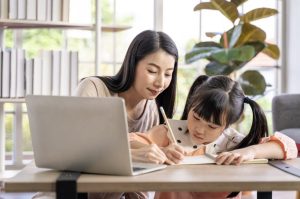
Once you’ve shortlisted a few, judge them on the points below. Most of it you can check in a single trial lesson.
Teaching style. Is the lesson interactive, or just worksheets read out loud? Children switch off fast either way, so watch what actually happens in the room.
Tutor quality. Native fluency matters, but so does knowing the MOE syllabus and being able to teach it simply. Fluent isn’t the same as good at teaching.
Class size. In a language class, if your child isn’t speaking, they aren’t learning. Smaller is better. Always ask for the maximum, not the average.
Curriculum balance. Pure fun won’t fix exams; pure drilling kills motivation. Look for a centre that covers oral, composition, comprehension and listening, but keeps kids engaged while doing it.
Schedule. Short, frequent sessions usually beat one long weekly marathon, especially for younger children. A regular recap keeps the language active.
Delivery mode. Online saves the commute and survives bad weather; in-person suits kids who need the classroom feel. Pick for your family’s actual week, not the ideal one.
Home-language support. If you don’t speak Mandarin at home, ask directly how the centre helps children who can’t get reinforcement after class.
Transparency. Clear fees, sensible policies, and real evidence of progress. Vague answers to straight questions are a red flag.
Tuition or Enrichment: Which Does Your Child Need?
Quick note, because parents mix these up. Tuition targets exams. Enrichment targets confidence and everyday use of the language. If your child’s real issue is speaking and comfort rather than grades, our guide to the best Chinese enrichment classes in Singapore covers that side. Many children do well with a bit of both.
Making Your Best Chinese Tuition Choice in Singapore
The best Chinese tuition in Singapore isn’t a one-size-fits-all label. It’s the centre that best aligns with your child’s personality, your family’s logistical needs, and your academic goals.
For many modern Singaporean families, the winning formula combines qualified native tutors, exceptionally small classes, a balanced MOE-aligned curriculum, and the sheer convenience of live online learning.
This is the core model Connected Learning delivers for personalised, effective instruction that fits seamlessly into busy lives.
If you’re comparing options, a trial lesson is often the clearest test. It shows whether your child speaks, receives correction, and stays engaged, all within a real class setting.
Frequently Asked Questions
How much does Chinese tuition cost in Singapore?
It varies a lot by format and level. Group classes commonly fall somewhere around $200 to $600 a month, while one-to-one sessions cost more. Watch for extras on top of term fees, such as registration, materials or deposits, and ask for the full picture upfront.
What’s the difference between Chinese tuition and enrichment?
Tuition is built around exams: comprehension techniques, composition formats, oral and listening practice. Enrichment is built around using the language, so speaking, listening and real conversation. Tuition lifts grades; enrichment builds comfort and confidence.
Is online Chinese tuition as effective as in-person?
It can be, when it’s done well. Live online classes with small groups, interactive tools and active speaking practice work just as hard as a classroom, and they save the commute. The format matters less than whether your child is actually talking and being corrected.
Does it matter if a centre is MOE-registered or uses ex-MOE teachers?
It helps. MOE-registered or ex-MOE teachers usually have strong syllabus knowledge and a clear sense of exam standards. It’s a useful signal, though it isn’t the only one. Small classes and a teacher who can engage your child matter just as much.
When should my child start Chinese tuition?
Whenever the gap starts to show, often in the early primary years, or ahead of milestones like the PSLE. Earlier help is easier than catching up later, but a trial lesson is the best way to judge whether your child is ready and whether the centre fits.
How small should the class be?
Small enough that your child speaks every lesson. Many centres run groups of six to ten; the smaller the group, the more talking and correction each child gets. Ask for the maximum class size before you sign up.