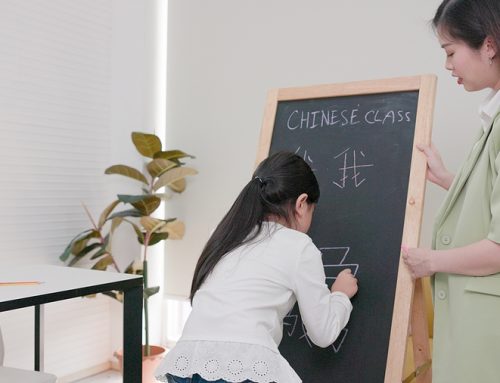


For many Singaporean parents, the Primary School Leaving Examination (PSLE) seems like a distant concern. Yet there’s a whisper of worry that grows louder every year, especially around the Chinese language paper. That sense of anxiety isn’t unfounded. Chinese has become more than a subject; it’s a test of comprehension, creativity, and confidence. Aspirations to achieve Bilingual or even Higher Mother Tongue highlight how demanding Chinese language mastery has become. Well before Primary 6 arrives, the pressure mounts, and if foundation isn’t built early, last-minute preparation often leads to overwhelm. This guide aims to break down why PSLE Chinese feels so daunting today, and then outline a long-term strategy that lower-primary parents can start using now to build competency, reduce anxiety, and support genuine growth.
Why the PSLE Chinese Paper Feels So Hard
Modern PSLE Chinese includes three papers—composition and language use (Paper 1), comprehension application (Paper 2), and oral/listening (Paper 3)—each testing different higher-order skills. For many Singaporean families, English dominates the home and play, with Chinese reserved for classroom drills or homework. That environment mismatch is the root cause: children rarely use Chinese spontaneously, which limits intuitive grasp of grammar, tone, expression. That in turn heightens anxiety during exams that demand expression beyond rote recall.
Exams have changed too. Gone are days when memorising 好词好句 (hǎocí hǎojù) in isolation would guarantee a good mark. Today’s Paper 1 expects coherence, imagination, emotional insight, and fluent narrative flow. Paper 2 demands ability to infer meaning, recognise implied details, compare characters or ideas, and write concise answers beyond repeating sentences from the passage. Paper 3’s oral component, often featuring video stimulus, requires real-time expression of opinion or idea—something few young students manage without practice. That shift turns Chinese from a memory exercise into a language performance.
Another common trap is direct translation. Students think in English and mentally translate into Chinese, leading to awkward phrasing and errors in structure. That mental step erodes fluency and consumes precious composition time. Finally, the sheer volume of vocabulary expected by Primary 6 is enormous. Without ongoing exposure and context, retention suffers. Words taught during tuition may be forgotten by the next academic year. That gap between expectation and environment is what makes the journey uphill.

Starting Early: Building a Strong Foundation from P1 to P4
Creating a solid foundation should begin long before Primary 5 or 6. Between Primary 1 and 4, the goal is not paper-perfect performance but natural growth and familiarity.
In P1 and P2, the focus should be immersion. Make Chinese something that’s part of daily routine rather than a chore. Set your child’s favourite cartoon to Chinese audio. Play simple Chinese children’s songs at home or in the car. Use basic Chinese phrases during familiar routines—“吃饭了” (chīfàn le, time to eat), “睡觉了” (shuìjiào le, time for bed). Even if pronunciation isn’t perfect, consistency matters. This approach lowers resistance and helps children absorb sounds, grammar patterns, rhythms instinctively.
Reading aloud plays a powerful role. Picture books with pinyin or audio support work well, especially for parents who aren’t fluent. This builds aural familiarity. Hearing story structure and seeing characters paired with sounds makes Chinese less foreign. Create a relaxed reading habit, free of pressure. Let your child choose the books and dramatise characters. Gradually, they become comfortable with Chinese plotlines and vocabulary—even without understanding every word.
Between P2 and P3, vocabulary becomes more intentional. Instead of flashcards, embed learning into daily life. On a zoo visit, pause to teach words like 猴子 (hóuzi), 长颈鹿 (chángjǐnglù), 大象 (dàxiàng). At mealtimes, introduce ingredients like 鸡蛋 (jīdàn), 蔬菜 (shūcài), 饭 (fàn). Those real-world anchor points deepen memory, making recall effortless. Encourage your child to keep a word journal where they record new words along with a sentence or drawing. That bridges passive exposure to active processing and makes vocabulary personal and meaningful.
Moving into P3 and P4, shift attention toward comprehension skills. Introduce graded readers suitable for their level—Maha Yuyi series works well for local context. Continuous successful reading boosts confidence. After each story, discuss main ideas through simple questions: 谁? 哪里? 什么时候? 发生了什么? 为什么? These “5W1H” prompts teach them to look for key information in a passage, a habit essential for tackling Paper 2 comprehension questions. Gradually introduce short summaries and paraphrasing in Chinese, helping them move from recognition to active comprehension.
Sharpening Specific Skills Over Time
As your child approaches upper primary, targeted practice becomes more effective. Start with composition writing in P3–P4. Instead of forcing full essays, encourage story planning visually. A simple four‑panel comic strip of their story idea can ground narrative structure. This exercise helps them identify beginning, middle, and end, and avoids plot confusion when they write. After that, focus on emotional depth. Ask your child to consider how characters feel—问“他感觉怎么样?” Emotional vocabulary like 开心, 紧张, 难过 enriches writing, making it more authentic and exam-ready.
Oral proficiency often catches students off guard. Make video‑based responses part of routine. Watch brief, age-appropriate video clips—animations, commercials, or short stories—and casually ask, “你觉得怎么样?” or “你会怎么做?” to simulate PSLE-style prompts. Practice makes spontaneous response feel natural. Recording your child speaking or reading aloud is also useful. Listening back highlights pronunciation or pauses they might not notice in real time. Gradual improvements over several months compound into noticeable gains in fluency and confidence.
Assessment books often become tools of stress. Instead, use them diagnostically. Observe error patterns: does your child struggle with inference, conjunctions, or sequencing in comprehension? Focus on the specific skill rather than doing excess papers. Likewise with compositions—identify whether the issue is vocabulary, structure, or connecting ideas. Then direct targeted support. High-quality, deliberate drills are more effective than quantity alone.

Sustaining Momentum and Spotlighting Growth
Language learning is a marathon. When small routines build over weeks and months, transformation happens. Notice small wins: when your child reads a graded reader with fewer hesitations, correctly orders food in Chinese, or explains story events in Chinese. Celebrate these milestones. Framing Chinese learning as progress and discovery rather than punishment encourages curiosity and positivity.
As parents, your role redefines the process. You’re not a grammar teacher or tutor. You’re a coach and cheerleader. Checking in, listening, celebrating, and guiding learning habits builds a supportive environment. When a child feels safe to try and safe to make mistakes, they stay engaged.
By investing time early—from Primary 1 upward—and focusing on immersion, meaningful vocabulary, and structured skill practice, you reshape language from a burden into a tool. At Primary 6, instead of panic, your child taps into a reservoir of competence and confidence. The PSLE Chinese paper becomes less of a hurdle and more of an opportunity to demonstrate what consistent, thoughtful preparation can yield. With steady exposure, encouragement, and a calm long-term mindset, you can set your child on a path where Chinese is a bridge—not a barrier.
Believing in progress over perfection, you help your child transform challenge into capability. Chinese success doesn’t emerge overnight; it emerges from months and years of forming constructive habits. And it starts now, long before Primary 6, with daily warmth, curiosity, and persistence.
Finding Extra Help That Fits Your Family
For parents looking for more structured support aligned with Singapore’s education system, Connected Learning offers Chinese programmes designed for local students. Their engaging, age-appropriate curriculum complements what children learn in school while building real-world fluency. As a partner in your child’s journey, they help shift Chinese from a stress point into a strength.
Believing in progress over perfection, you help your child transform challenge into capability. Chinese success doesn’t emerge overnight; it emerges from months and years of forming constructive habits. And it starts now, long before Primary 6, with daily warmth, curiosity, and persistence.