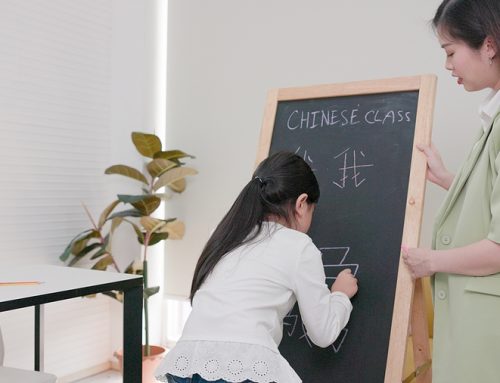


Does the mere mention of “华文理解” (Huáwén Lǐjiě) lead to sighs and groans in your household? You’re not alone. In a setting where English often dominates daily conversation, raising a bilingual child in Singapore presents unique challenges. Even though Singapore’s Ministry of Education (MOE) provides structured Chinese instruction from Primary 1 to Primary 6, real understanding often stalls when children find little use for the language outside school. This guide offers concrete, low-stress strategies that seamlessly fit into everyday life, giving your child sustainable confidence and true comprehension skills without relying on rote memorisation.
Why Rote Learning Isn’t Enough for Comprehension
Character recognition and spelling drills may help with 听写 (tīngxiě), but they don’t guarantee that children grasp meaning in sentences or passages. Many students can recite vocabulary lists yet struggle when exam questions require inference, understanding context, or expressing opinions. MOE’s exam formats today increasingly focus on higher-order thinking skills—drawing conclusions, making connections, and using language creatively. Flashcards and drills might build recognition, but they don’t help children understand how ideas relate or how meaning is constructed through language in real life. A shift in mindset matters: rather than treating Chinese as a subject to pass, consider nurturing it as a living tool, capable of connecting children with culture, community, and future opportunities.
Building a Rich and Relevant Vocabulary
Children remember words that matter in their lives. When vocabulary stays abstract, retention drops. Embedding language into relevant, meaningful experiences builds long-term memory. Start by labelling everyday items in the home. Floating sticky notes on a fridge with 冰箱 (bīngxiāng) or on the sofa with 沙发 (shāfā) can make use of visual cues in context. With repeated exposure, characters become familiar without pressure.

Another effective approach involves learning words through themes tied to your child’s passions—dinosaurs, space, cooking, or animals. Charting species like 狮子 (shīzi), 老虎 (lǎohǔ), or 大象 (dàxiàng) during a trip to the Singapore Zoo or while watching a video documentary helps vocabulary connect with real-world experience. That kind of relevance makes memory layers more robust than random lists ever can.
Many parents receive assessment books at school or tuition. These can be used strategically: instead of rushing to complete all practice questions, skim the vocabulary lists and pick words to weave into conversation during the week. If the topic in school is “food”, try talking about 面条 (miàntiáo) or 饮料 (yǐnliào) while cooking or grocery shopping. Everyday usage of these words aligns school learning with life, anchoring them more firmly.
Active Immersion: Weaving Chinese into Your Daily Routine
Rather than adding more tasks to a busy schedule, integrate Chinese naturally into routines you already follow. Each moment offers potential for passive or active learning without turning it into a chore.
Listening is a subtle way to build comprehension. Story podcasts or audiobooks in Chinese, available through apps like NLB’s Libby, expose children to proper sentence structure, tone, and vocabulary in an engaging story context. These can play in the background during car rides or quiet time. Sing-along Chinese songs also help. Children often pick up phrases through repetition without realising they’re learning.
Another opportunity lies in screen time. Switching the audio language on familiar shows—Cartoon Network or Disney+ titles your child already watches—introduces Chinese in an accessible way because the storyline is known. Exposure becomes meaningful. Educational Chinese channels like Little Fox Chinese on YouTube or children’s programmes on meWATCH offer curated content that reinforces spoken language with animation and brightness that keeps young viewers interested.
Real-world routines offer ideal practice fields. Visiting a hawker centre becomes a chance to practise Chinese when your child helps order with phrases like “一个鸡饭, 不要辣” (yī gè jīfàn, bú yào là). Commuting by MRT offers visual reinforcement when reading station names in Chinese together. Grocery shopping becomes an adventure if you present a dual-language list and ask your child to find items using the Chinese characters. These everyday tasks emphasize Chinese as a tool for communication—not a school exercise.
Cultivating a Reading Habit at Home
Reading offers the deepest immersion into comprehension. It enhances vocabulary, sentence structure recognition, and inferential skills. Starting with the right book matters most to make reading feel achievable rather than intimidating.
Graded readers serve this purpose well. These books adjust vocabulary and length based on ability to ensure content remains accessible. They’re widely available at public libraries, particularly branches with comprehensive Chinese sections, and at local Singapore bookstores that stock children’s Chinese books. Picture books with minimal characters also offer fun entry points for early readers.

The five‑finger rule—adapted from English reading methodology—helps pick appropriate books. If a child doesn’t recognise five or more characters on a page, that book may be too advanced. Choosing simpler texts builds confidence and prevents frustration. As children gain mastery, gradually introducing slightly more challenging pages encourages progress.
Reading together transforms the experience. Instead of simply narrating a story, pause at key moments and ask open-ended questions like, “你觉得接下来会发生什么?” or “你喜欢这个角色吗?为什么?” These questions prompt children to think and respond in Chinese, strengthening comprehension and encouraging deeper emotional engagement rather than passive listening. Sharing the reading experience also conveys that language can prompt conversation and insight—not just exams.
Allowing choice empowers children. When they select their own Chinese books at locations like the library or bookstore, they’re more motivated to read. Choice builds agency and fosters intrinsic motivation, turning reading into a self-led exploration instead of a duty.
Encouraging Parents Who Are Not Fluent in Chinese
You don’t need fluency to support your child’s progress. Your role as a supportive partner—someone who believes in the journey—makes all the difference. Adopting a growth mindset helps: if your child encounters an unfamiliar word or phrase that puzzles both of you, say something like, “That word’s new for me too. Let’s look it up together.” That simple response models curiosity and mutual learning.
Smart tools make this easier. Pleco, for example, offers reliable character definitions, tones, stroke order, and example sentences. Google Translate’s camera feature can decode unfamiliar text instantly, though it’s important to explain that such tools might not always be perfectly accurate. Clarify that these help with gist and exploration—not final comprehension.
Most essential is encouragement. Celebrate small efforts—even when your child replies haltingly or guesses meaning. Positive reinforcement builds confidence and nurtures curiosity. When your child feels safe to try and safe to be wrong, they will continue to engage voluntarily with Chinese.
Keeping Perspective: Language Learning as a Marathon
Improving Chinese comprehension isn’t about leaps. It requires steady exposure, consistent practice, and positive reinforcement over time. Encourage small steps—reading a short graded reader, listening to a song, ordering in Chinese—not full-scale overhaul. Consistent, gentle exposure yields sustainable growth.
When your child reads a story with fewer hiccups, when they catch a phrase in a song, or when they order confidently at a hawker stall—those are wins worth celebrating. Connecting routine with language and weaving learning into life nurtures not just exams, but a lifelong appreciation of Chinese as a living, vibrant mode of expression.
This approach, centred on integration, immersion, and interaction, lays a firm foundation built over months and years. In time, what begins as hesitant pronunciation or paiseh effort can become pride in the language. Small habits create big changes. With patient consistency and encouragement, your child can grow from an English‑dominant environment into fluent, confident bilingual speakers who see Chinese as a bridge—not a burden.
Looking for Guided Support?
Parents looking for structured programmes tailored to Singapore’s curriculum can explore Connected Learning. Their offerings blend engaging, MOE-aligned content with nurturing instruction, making Chinese feel less like a school subject and more like a living language your child can use and enjoy. This local resource can complement your home efforts with professional support rooted in everyday relevance.